

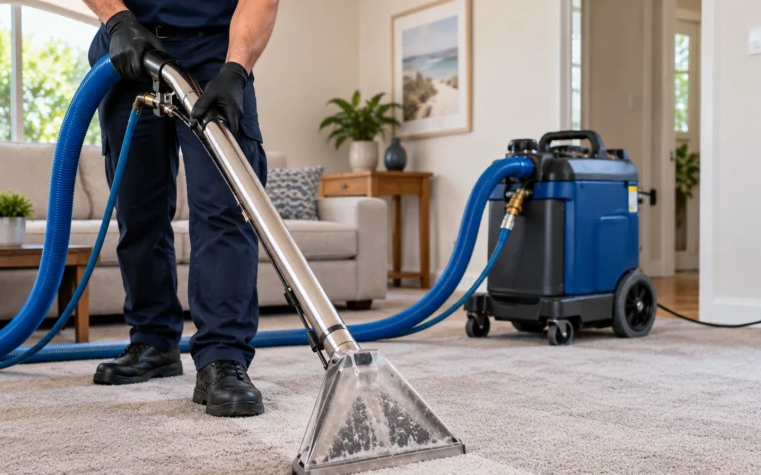

You shampoo the carpet expecting a fresher, cleaner home. The visible dirt disappears, the fibres look brighter and the room seems ready to use again. But a few hours later, an unpleasant smell begins to develop.
Perhaps it resembles a wet dog, damp clothing or something slightly sour. In other cases, a familiar pet odour returns even though the carpet looks perfectly clean.
It is an understandably frustrating experience. After spending time or money cleaning a carpet, nobody expects the room to smell worse than it did before.
The good news is that a temporary smell after carpet shampooing does not automatically mean the carpet is dirty, damaged or developing mould. Moisture can temporarily make existing odours more noticeable, while cleaning products and drying conditions can also influence how the room smells.
However, persistent dampness, worsening musty odours and contamination beneath the carpet deserve closer attention.
Understanding the difference can help homeowners decide whether to improve ventilation, contact their cleaner or investigate a more serious moisture problem.
Why Does Carpet Shampooing Sometimes Make Odours More Noticeable?
Most carpet shampooing and extraction methods introduce moisture into the carpet to loosen and remove dirt.
Even when the equipment extracts much of that liquid, some moisture normally remains in the fibres until the carpet dries.
During this period, previously unnoticed smells may become more apparent.
For example, a carpet that has experienced old food spills, pet accidents or years of everyday use may contain residues that were not particularly noticeable while dry.
Introducing moisture can temporarily make some of these odours easier to detect.
Warmth and humidity may also intensify the smell.
This does not necessarily mean shampooing has created new contamination. In some cases, cleaning has simply made an existing problem more noticeable.
The Institute of Inspection, Cleaning and Restoration Certification (IICRC) explains that heat and humidity associated with cleaning can amplify certain odours, including those associated with pets and other household contamination.
The important question is whether the smell diminishes as the carpet dries or remains after the cleaning process is complete.
What Does a Wet-Dog Smell After Carpet Cleaning Mean?
A damp, animal-like smell is one of the complaints homeowners sometimes describe after shampooing.
The phrase wet-dog smell does not necessarily indicate that a dog has recently used the carpet.
A similar odour can arise when moisture interacts with accumulated organic material, such as skin oils, food residues, pet-related contamination or other substances present in the carpet.
If the carpet is still damp, the smell may become less noticeable as drying progresses.
However, the location and history of the carpet matter.
A strong odour concentrated near a pet’s usual resting place may suggest a different source from a mild smell affecting the entire room immediately after cleaning.
Likewise, a musty smell that existed before shampooing may indicate an underlying moisture issue rather than a problem caused by the latest cleaning session.
Avoid trying to identify the exact cause by smell alone. Several different sources can produce similar odours.
Could the Carpet Simply Be Taking Too Long to Dry?
Drying conditions have a significant influence on the way a freshly cleaned carpet smells.
A carpet cleaned in a warm, well-ventilated room may dry more quickly than one cleaned during cool, humid weather.
Several factors affect drying:
- The amount of water applied during cleaning.
- How effectively the equipment extracts moisture.
- Carpet fibre type, density and construction.
- Indoor humidity and temperature.
- Ventilation and air movement.
- Whether moisture has reached the backing or underlay.
A thick carpet with dense fibres may retain moisture differently from a low-pile synthetic carpet.
Drying can also be slower in rooms where windows remain closed and air circulation is poor.
For Australian households, seasonal conditions matter. A carpet cleaned during a cool, wet Perth winter may require more careful drying arrangements than one cleaned on a warm day with suitable airflow.
However, carpet drying times cannot be determined from the weather alone.
The cleaning method, equipment and amount of moisture used are equally important.
If a professional cleaner performed the work, ask about the expected drying period and whether additional ventilation is recommended.
How Can You Tell Whether the Smell Is Temporary or a Warning Sign?
A mild odour while the carpet is drying is different from a persistent smell accompanied by excessive moisture.
The following observations can help homeowners decide what to do.
| What you notice | Possible explanation | Sensible response |
| Mild damp smell immediately after cleaning | Temporary moisture-related odour | Follow drying instructions and monitor |
| Cleaning-product fragrance that gradually fades | Residual product scent | Ventilate as appropriate |
| Familiar pet smell returning in one area | Possible remaining pet contamination | Arrange further assessment |
| Strong musty smell with prolonged dampness | Possible retained moisture or existing microbial contamination | Investigate promptly |
| Sharp chemical smell causing irritation | Possible product or ventilation concern | Leave the affected area and seek advice |
These observations are clues rather than definitive diagnoses.
A carpet can smell unpleasant without containing mould, and a carpet that looks dry on the surface may still have moisture deeper in its construction.
The pattern becomes more important than any single smell.
Can Old Pet Urine Start Smelling Again After Shampooing?
Yes. Old pet accidents are a recognised reason why carpet odours can return after cleaning.
Urine can travel through the visible carpet fibres and, depending on the quantity and construction, reach the backing or underlay.
If contamination remains below the surface, ordinary shampooing may improve the appearance without removing the original source of the odour.
Moisture and increased humidity can then make that smell noticeable again.
The Carpet and Rug Institute explains that persistent urine contamination can produce recurring odours, particularly when humidity changes.
This is why households researchingcarpet cleaning animal urine may discover that their problem involves more than routine shampooing.
For example, a homeowner may clean a lounge-room carpet after noticing a general stale smell. Once the carpet becomes damp, an old urine odour may become apparent around the area where a pet previously had an accident.
Applying another full-room shampoo treatment may not resolve contamination beneath that particular section.
The appropriate response depends on where the urine has travelled, the materials affected and whether those materials can be treated successfully.
In severe cases, the carpet backing, underlay or surrounding materials may require additional assessment.
Complete odour removal cannot be guaranteed in every situation.
Can Too Much Shampoo or Detergent Make the Problem Worse?
Another possibility is that cleaning products have not been used or removed appropriately.
Carpet shampoos and detergents are formulated for particular applications and equipment.
Using too much product does not necessarily improve cleaning performance.
Excessive detergent can leave residue in the carpet, especially when the cleaning process does not remove it adequately.
This may affect the way the fibres feel and can encourage further soiling.
Some products also contain fragrances that are particularly noticeable while the carpet is damp.
However, a strong odour should not automatically be blamed on detergent residue.
It is important to consider the actual product used, the manufacturer’s instructions and whether the carpet has dried properly.
Avoid adding vinegar, baking soda, bleach or additional cleaners in an attempt to neutralise an unidentified smell.
Mixing incompatible products can create hazardous reactions, and further wetting may complicate the original problem.
If a professional cleaning service was involved, ask which products were used and whether additional rinsing or assessment is appropriate.
When Does a Musty Carpet Smell Become a Mould Concern?
A musty smell deserves greater attention when it persists alongside dampness, water damage or other signs of a moisture problem.
Mould requires suitable moisture conditions to grow.
The United States Environmental Protection Agency recommends drying wet building materials within approximately 24 to 48 hours after water exposure to help prevent mould growth.
For carpets, this includes the backing and padding, not just the visible fibres.
This guidance concerns moisture and water-damage prevention; it does not establish a universal drying-time guarantee for every carpet-cleaning method.
A carpet that smells musty immediately after shampooing has not necessarily developed new mould. The cleaning process may instead have made an existing odour more noticeable.
Nevertheless, if the carpet remains unexpectedly wet, the smell becomes stronger or there is evidence of water damage, investigate promptly.
The cause might involve excessive cleaning moisture, an earlier spill, a plumbing leak or dampness beneath the flooring.
If significant mould contamination is suspected, avoid further DIY shampooing and obtain advice from a suitably qualified remediation professional.
What Should You Do Immediately if the Carpet Smells Bad?
The first step is to determine whether the carpet is still drying or whether the problem continues after the expected drying period.
For a carpet without evidence of flooding or another serious moisture problem, several practical measures may help.
Improve ventilation. Open windows when outdoor conditions are suitable, or use appropriate air circulation to assist drying.
Manage indoor humidity. Air conditioning or a dehumidifier may be useful when the room is particularly humid.
Avoid unnecessary foot traffic. Keep people and pets away from wet carpet until it is ready for normal use.
Do not add more water. Repeated shampooing can introduce additional moisture without identifying the cause.
Check where the smell is strongest. A localised odour near an old stain may suggest a different problem from a smell affecting the whole room.
Record when the smell appeared. Note whether it began immediately, became stronger during drying or returned after the carpet appeared dry.
If the smell is severe, causes irritation or is accompanied by unusual chemical fumes, leave the affected area and seek appropriate advice rather than continuing to investigate at close range.
Should You Shampoo the Carpet Again to Remove the Smell?
Not immediately.
A second shampoo treatment may be helpful in certain circumstances, but it should not be the automatic response to every unpleasant odour.
If the carpet is still damp, adding more moisture could prolong drying.
If old urine contamination is responsible, routine shampooing may not address the underlying source.
If the smell comes from existing water damage or damp underlay, further cleaning of the visible carpet may be ineffective.
Even when residue is suspected, the appropriate corrective treatment depends on the carpet material and products previously used.
Allow the carpet to dry as instructed, identify the likely problem and seek advice before repeating the process.
The goal is to remove the cause of the odour rather than temporarily conceal it.
When Should You Contact a Professional Carpet Cleaner?
Professional advice becomes particularly useful when a smell persists after the carpet has dried, the source remains uncertain or previous cleaning attempts have failed.
When comparing carpet cleaning services, homeowners should ask how the provider assesses existing odours, chooses suitable cleaning methods and manages moisture during extraction.
If the carpet was recently cleaned professionally, contact the original provider first.
Explain what the smell resembles, when it appeared, whether the carpet is still damp and whether the area has a history of pet accidents or water damage.
This information can help determine whether the issue involves drying conditions, remaining contamination or another problem.
A cleaner may be able to assess the carpet and recommend an appropriate next step, but not every issue can be resolved through cleaning alone.
Where substantial moisture has affected the underlay or subfloor, additional investigation or remediation may be necessary.
A trustworthy assessment should include realistic expectations rather than an unconditional promise that every odour can be eliminated.
How Can You Prevent Carpet Odours After Future Cleaning?
Good preparation and appropriate cleaning methods can reduce the likelihood of moisture-related problems.
Before using a domestic carpet shampooer, check that the carpet is suitable for the equipment and cleaning solution.
Follow the manufacturer’s instructions for dilution, water application and extraction.
Avoid repeatedly soaking heavily stained areas.
When booking professional cleaning, mention existing odours, previous pet accidents and any known water damage before the appointment.
This allows the cleaner to consider whether routine cleaning is suitable or whether further assessment may be needed.
Arrange cleaning at a time when the room can be ventilated appropriately and the carpet allowed to dry before normal use.
Regular vacuuming and prompt attention to spills are also important. They help limit everyday soil accumulation, although they cannot prevent every odour problem.
The best prevention strategy is to address contamination early rather than waiting until it becomes difficult to identify.
Final Thoughts: When Should You Be Concerned?
A carpet that smells slightly different after shampooing is not automatically a cause for alarm.
Moisture can temporarily intensify existing odours, and cleaning-product fragrances may remain noticeable during drying.
However, a strong smell that persists, recurring pet urine odours, unexpected prolonged dampness or signs of water damage should not be ignored.
The most important distinction is between a temporary drying-related smell and an unresolved problem beneath the surface.
Rather than repeatedly applying shampoo or fragrance, allow suitable drying, observe whether the odour changes and identify the likely source.
When the smell remains or the carpet fails to dry as expected, professional assessment can help determine whether further cleaning, targeted treatment or moisture investigation is appropriate.
A genuinely fresh carpet is not simply one that smells pleasant immediately after shampooing. It is one that has been cleaned using a suitable method, dried properly and assessed realistically for any remaining problems.